THR YAG CARBON
We work with the THR YAG CARBON to lighten and remove tattoos and permanent makeup, and for carbon peeling. It is a Q-Switched Nd:YAG laser that works at wavelengths of 532 and 1064 nm.
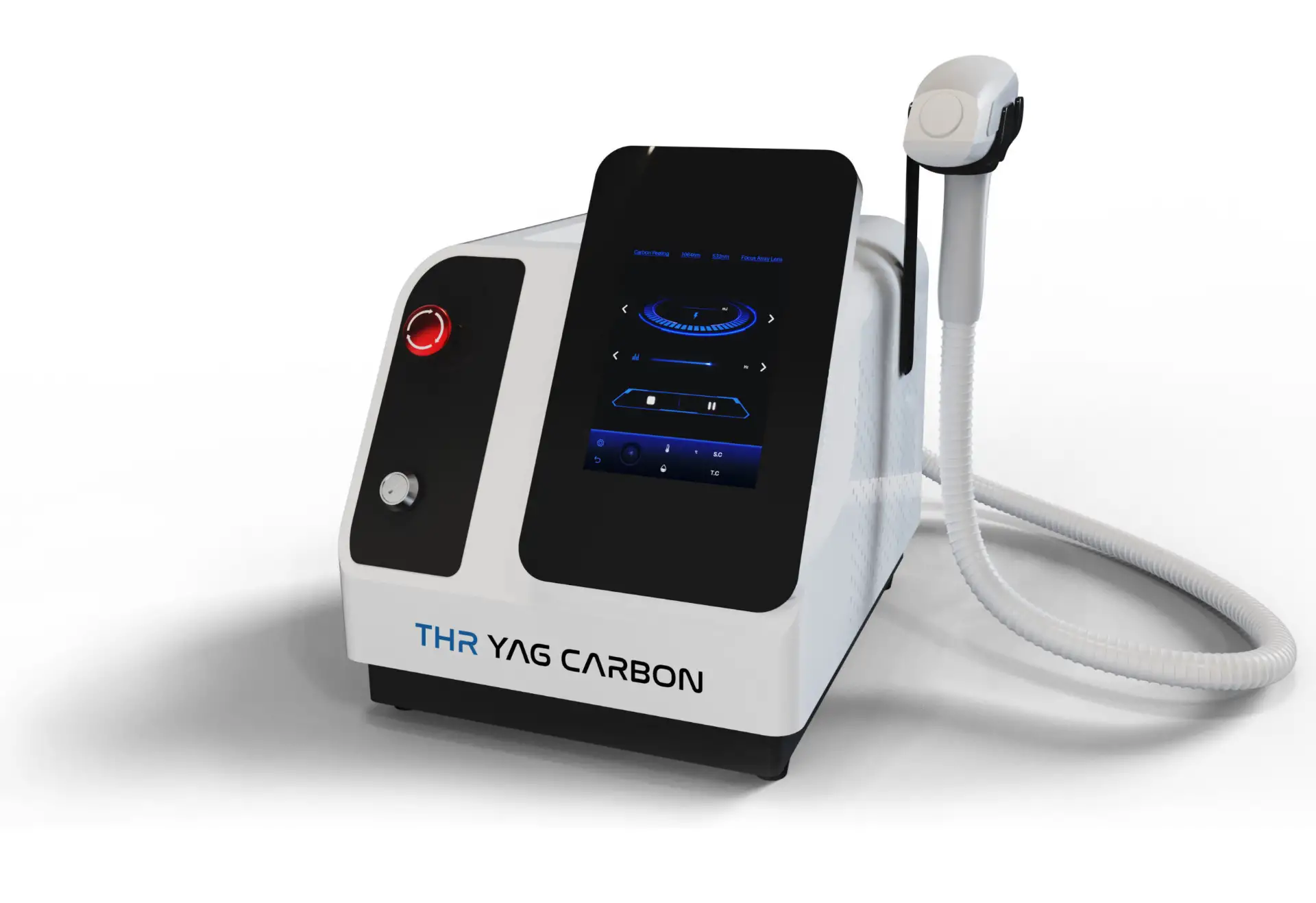
The device at a glance
| Model | THR YAG CARBON |
|---|---|
| Laser type | Q-Switched Nd:YAG |
| Wavelengths | 532 and 1064 nm |
| How we use it | Permanent makeup removal, tattoo removal, carbon peeling |
Three treatments, one device
- Permanent makeup removal
Lightening or removal of permanent makeup pigment, with an individual plan and a check of the pigment and skin before treatment. Some pigments may darken or change colour, so the response is checked cautiously before continuing.
- Tattoo removal
Gradual treatment of the tattoo, where the aim is removal or lightening ahead of a correction or cover-up. We check the progress between sessions.
- Carbon peeling
For carbon peeling the same device is used differently: a carbon-based lotion is applied to the skin and the laser is passed over it. It is a facial skin-care treatment, with a different process and goal from tattoo removal.
How does it work?
The device sends short pulses of light to the pigment in the skin. The pulses break the ink into small particles, and the body gradually clears them. That is why the change keeps developing between sessions.
What does it mean for your treatment?
Different ink colours respond differently to light. Before treatment we check the tattoo's colours, size, location, any previous layers and your skin type. With permanent makeup it is especially important to check the pigment, because some shades may darken or change.
What is important to know?
The goal can be removal, or lightening ahead of a correction or cover-up. Complete removal is not always possible, and the number of sessions depends on how your skin actually responds. Redness and sensitivity may follow treatment, and occasionally changes in skin colour, blisters, infection or scarring. We will explain how to care for the area between sessions.
Frequently asked questions
The information on this page is general and is not a substitute for a personal consultation. Suitability for treatment, results and possible risks are reviewed at the consultation.
Would you like to know more about the treatment?
Arrange a consultation to discuss the process, expectations and next steps.